
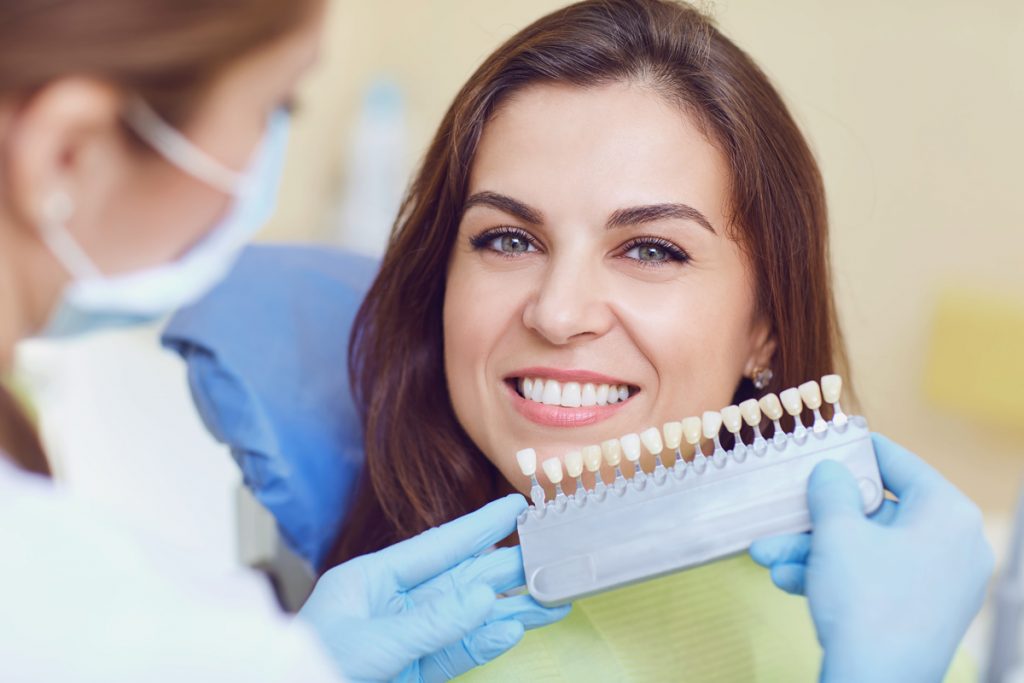
Teeth Whitening in Frisco, Texas
Professional whitening lifts stains that brushing cannot reach, using a peroxide gel at a concentration and under supervision that store-bought strips cannot match. At Forest Dental Cafe in Frisco, Dr. Demian Kim offers two options: laser whitening in the chair using the Biolase Epic system, which takes about twenty minutes, and custom-fitted take-home trays for patients who prefer to whiten gradually.
Both work. Which one is right for you depends on your timeline, how sensitive your teeth are, and what is actually causing the discoloration — which is where this page starts, because it determines whether whitening will work at all.
Why Teeth Discolor in the First Place
Not all stains respond to whitening, and knowing which kind you have saves you disappointment.
Extrinsic stains sit on the enamel surface. Coffee, tea, red wine, curry, tomato sauce, tobacco, and dark sodas all leave pigment behind that accumulates over years. These respond very well to whitening — this is the majority of adult discoloration.
Intrinsic stains come from inside the tooth. Causes include tetracycline exposure during tooth development, fluorosis, trauma to a tooth, or aging, which thins the enamel and lets the naturally yellow dentin underneath show through. These respond less predictably. Some lighten meaningfully; others need veneers to change color at all.
A single dark tooth is usually a different problem entirely. A tooth that has darkened on its own often has a dying or dead nerve, and no amount of external whitening will fix it. That tooth needs to be evaluated, not bleached.
Dr. Kim will tell you which category you fall into at the consultation, before you spend anything on treatment that will not deliver what you are hoping for.
Laser Whitening with the Biolase Epic
For patients who want results in a single visit, we use the Biolase Epic diode laser system.
How it works. A protective barrier is placed over your gums, whitening gel is applied to the teeth, and the laser’s 940 nm wavelength activates the gel. The light energy accelerates the chemical reaction that breaks down stain molecules, so the gel does more work in less time than it would sitting on the teeth passively.
Why we chose this system. Three practical reasons:
- Speed. Around twenty minutes of actual treatment time, compared with the hour or more that conventional in-office whitening typically requires. You can do it on a lunch break.
- Less sensitivity. This is the biggest one. Traditional in-office whitening often leaves patients with sharp cold sensitivity for a day or two, which is the single most common reason people avoid whitening a second time. Shorter gel contact time means significantly less of that.
- Results in one visit. Most patients see a noticeable shade change the same day. How many shades depends on your starting color and the type of staining — we will give you a realistic expectation before we begin, not after.
Laser whitening pairs well with take-home trays: the in-office session does the heavy lifting, and the trays let you top up months later without another appointment.
Custom Take-Home Whitening
Take-home whitening uses trays made from impressions of your own teeth and a professional-strength gel you apply at home over a set period.
Why custom trays beat the one-size-fits-all kits sold online: a tray molded to your teeth holds the gel against the enamel and keeps it off your gums. Generic trays and strips leak. That leaking is what causes most of the gum irritation people report from over-the-counter whitening, and it also means uneven results, since the gel never sits evenly across every tooth.
Who this suits: patients who prefer to go gradually, patients with sensitive teeth who want to control the pace, and anyone who wants the ability to touch up at home in the future.
How long it takes: typically two to three weeks of daily wear, depending on the gel strength and how much lifting your teeth need.
Your trays stay usable for years. Most patients come back only for replacement gel.
Comparing Your Options
| Laser Whitening (In-Office) | Custom Take-Home | Store-Bought Strips | |
|---|---|---|---|
| Time to results | One visit, about 20 minutes | 2–3 weeks | 4–6 weeks, if at all |
| Gel strength | Highest | Professional strength | Lowest |
| Fit | Applied by clinician | Custom-molded trays | One size fits nobody |
| Sensitivity risk | Lower with laser | Controllable — you set the pace | Common, from gel on gums |
| Even coverage | Yes | Yes | Frequently uneven |
| Exam beforehand | Yes | Yes | No |
| Reusable later | Touch-ups with trays | Yes — keep the trays | Buy again each time |
The consideration that matters most: whitening a mouth with untreated decay or gum disease drives peroxide where it should not go and can cause real pain. A professional whitening appointment starts with an exam. A box from a store does not.
What About Sensitivity?
Sensitivity is the reason most people stop whitening, so it is worth being straightforward about it.
Why it happens. Peroxide passes through enamel into the dentin below, which contains microscopic tubules leading toward the nerve. That temporary movement is what you feel as a sharp response to cold. It is not damage, and it resolves — usually within 24 to 48 hours.
What reduces it:
- Shorter gel contact time. This is the main advantage of the laser system.
- Desensitizing agents. Applied before or after treatment, depending on your history.
- Pacing take-home treatment. Wearing trays every other night instead of nightly still works. It simply takes longer.
- Treating the cause first. Exposed root surfaces from gum recession are far more sensitive than enamel. If that is your situation, we address it before whitening rather than after you are already uncomfortable.
If you have had a bad experience with whitening before, tell us. It usually means the approach needs adjusting, not that whitening is off the table for you.
How Long Do Results Last?
Typically one to three years, with a wide range depending on habits.
What shortens it: daily coffee or tea, red wine, tobacco, and dark sodas. What extends it: rinsing with water after staining drinks, using a straw for iced coffee, and consistent professional cleanings, which remove the surface buildup that dulls your result before the underlying shade actually changes.
Patients who have take-home trays can refresh at home with a night or two of gel when they notice things dimming. That is far cheaper and easier than starting over.
Whitening Before Crowns, Veneers, or Fillings
This is the single most important timing decision in cosmetic dentistry, and it is the one patients most often learn about too late.
Porcelain and composite do not whiten. Crowns, veneers, and tooth-colored fillings are shade-matched to your teeth at the time they are made, and they stay that shade permanently. Whitening agents have no effect on them.
So if you whiten after restorative work, your natural teeth get lighter and your crowns stay where they were — leaving a visible mismatch that can only be fixed by remaking the restorations.
The correct sequence is whiten first, restore second. Get your teeth to the shade you want, let the color stabilize for about two weeks, then have crowns or veneers matched to the new shade.
If you are considering veneers or any front-tooth restoration, raise whitening at the same consultation. Planning both together costs nothing extra and prevents a problem that is expensive to undo.
Paying for Whitening
Whitening is a cosmetic procedure, so dental insurance does not cover it. That is true everywhere, not just here — insurance pays for function, not appearance.
Dr. Kim gives you the cost at your consultation, before you commit to anything.
- Our in-house membership plan. For patients without dental insurance. Includes two cleanings, two exams, necessary x-rays, and a discount on treatment. Plans start at $100 per year.
- CareCredit. Available if you are combining whitening with other treatment.
Call 214.469.1001 and we will walk you through it.
Frequently Asked Questions About Teeth Whitening
How many shades will my teeth get lighter? It depends on your starting shade and what is causing the discoloration. Surface staining from coffee and tea typically responds very well. Intrinsic discoloration lifts less predictably. We give you a realistic expectation at the consultation rather than a number from a brochure.
Does laser whitening damage enamel? No. The laser activates the whitening gel; it does not cut or heat the tooth. Professional whitening at supervised concentrations does not weaken enamel. The temporary sensitivity some patients feel is fluid movement in the dentin, not structural damage.
Is in-office whitening better than take-home? Neither is better — they suit different situations. In-office is faster and supervised. Take-home is gradual and gives you control over pacing, which helps if you are sensitive. Many patients do both: one in-office session, then trays for maintenance.
Can I whiten if I have crowns or veneers? You can whiten your natural teeth, but the crowns and veneers will not change color. If that would leave a visible mismatch, we will tell you before you start and talk through the options.
Why do my teeth hurt after whitening strips? Usually because the gel is sitting on your gums rather than staying on the enamel. Strips and generic trays do not seal against your teeth, so gel leaks. Custom trays are made to stop exactly this.
How soon before an event should I whiten? Give yourself at least a week for a laser session, and three to four weeks for take-home trays. Color settles slightly in the days after treatment, and you want that behind you before photos.
Can I whiten while pregnant? We recommend waiting. There is no strong evidence of harm, but whitening is elective and there is no reason to take an unnecessary step during pregnancy. It will still be there afterward.
How old do you have to be to whiten your teeth? We generally wait until the permanent teeth are fully erupted and the enamel has matured. For most patients that is the mid to late teens. We are happy to discuss timing for a teenager at a regular visit.
Schedule a Whitening Consultation in Frisco
Forest Dental Cafe serves patients throughout Frisco, Little Elm, The Colony, Prosper, and north Plano. We offer evening appointments and every-other-Saturday hours — and a laser whitening session fits comfortably into either.
Come in, let us look at what is actually causing the discoloration, and we will tell you honestly which approach will get you where you want to be.
Call 214.469.1001 or request an appointment online.
8075 FM 423, Suite 110, Frisco, TX 75036