
Dental Implants in Frisco, Texas
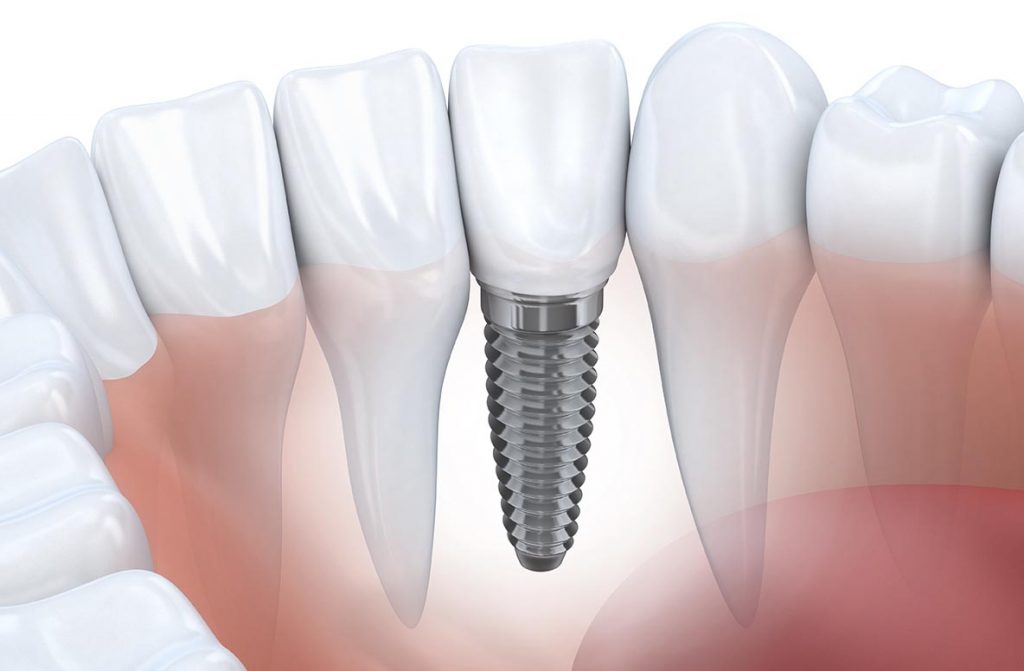
A dental implant is a small titanium post that replaces the root of a missing tooth. Once it fuses with your jawbone, a custom crown is attached on top — giving you a replacement tooth that looks, feels, and functions like the one you lost. At Forest Dental Cafe in Frisco, Dr. Demian Kim plans every implant using 3D CBCT imaging and backs the work with a five-year guarantee that goes well beyond what most practices offer.
If you have been living with a gap, a failing tooth, or a partial denture that no longer fits the way it should, this page walks you through what implants are, who they work well for, what the process involves, and how patients in Frisco, Little Elm, and The Colony typically pay for them.
What Is a Dental Implant?
A dental implant has three parts:
- The implant post — a titanium screw placed into the jawbone where the tooth root used to be. Titanium is used because bone naturally bonds to it, a process called osseointegration.
- The abutment — a small connector that sits at the gumline and links the post to the crown.
- The crown — the visible tooth, made from porcelain or zirconia and shaded to match the teeth around it.
Unlike a bridge, an implant does not rely on the teeth on either side of the gap for support. And unlike a denture, it does not rest on the gums or shift while you eat. It stands on its own, which is why implants are the closest thing modern dentistry has to a natural tooth.
3D CBCT Imaging: Why We Scan Before We Place
Every implant case at our Frisco office begins with a CBCT scan — cone beam computed tomography. It produces a three-dimensional image of your jaw rather than the flat, single-plane view a traditional dental x-ray gives.
That difference matters for three reasons:
We can measure bone in three dimensions. Height, width, and density are all visible. A flat x-ray can make bone look adequate when it is too thin from front to back to hold an implant safely.
We can see what to avoid. The inferior alveolar nerve in the lower jaw and the sinus floor in the upper jaw both sit close to common implant sites. A CBCT scan shows exactly where they are before any instrument touches bone.
We can plan the position before the appointment. The angle and depth of the implant are decided in advance, on the scan, rather than judged in the moment. That is the single biggest factor in how natural the finished tooth looks and how well it holds up.
The scan takes under a minute and delivers a fraction of the radiation of a medical CT.
Am I a Candidate for Dental Implants?
Most adults with one or more missing teeth are candidates. During your consultation, Dr. Kim reviews four things:
Bone volume. The implant needs enough healthy jawbone to anchor into. Bone begins to shrink within months of losing a tooth, so patients who have been missing a tooth for years sometimes need a bone graft first. This is common and not a reason to rule implants out. Your CBCT scan tells us definitively rather than approximately.
Gum health. Active gum disease has to be treated before an implant is placed. Healthy gums are what hold the seal around the implant long-term.
General health. Conditions that slow healing — uncontrolled diabetes, for example — affect timing and planning. Dr. Kim will discuss how your health history factors into your treatment.
Smoking. Smoking meaningfully raises the risk of implant failure. It does not automatically disqualify you, but it changes the conversation and the aftercare plan.
If implants turn out not to be the right fit, we will tell you directly and walk you through the alternatives rather than pushing treatment you do not need.
The Dental Implant Process Frisco, Step by Step
Implant treatment is spread over several months, but most of that time is healing rather than appointments. Here is what to expect.
1. Consultation and CBCT scan. Dr. Kim examines the site, takes a 3D scan to assess bone and locate anatomy, and maps out where the implant will sit. You will leave this visit knowing the plan, the timeline, and the cost before anything begins.
2. Extraction or bone grafting, if needed. If the tooth is still in place and failing, it is removed. If bone volume is insufficient, a graft is placed and given time to heal.
3. Implant placement. The post is placed into the jawbone under local anesthesia, following the position planned on your scan. Most patients are surprised by how routine this appointment feels — it is typically less involved than the extraction that preceded it.
4. Healing. The bone fuses to the implant over roughly three to six months, depending on the site and your healing. A temporary tooth can be worn during this period so you are never left with a visible gap.
5. Abutment and crown. Once the implant is stable, impressions are taken and your custom crown is made and fitted. This is the visit where the tooth becomes yours.
6. Follow-up. We check the implant at your regular cleanings and keep an eye on the bone and gum tissue around it for years afterward.
Dental Implants vs. Bridges vs. Dentures
There is no single right answer for everyone. This is how the three options actually compare:
| Dental Implant | Fixed Bridge | Partial Denture | |
|---|---|---|---|
| Affects neighboring teeth | No | Yes — adjacent teeth are reshaped | No |
| Preserves jawbone | Yes | No | No |
| Typical lifespan | Decades, often lifetime | 10–15 years | 5–10 years, needs relining |
| Feels like a natural tooth | Yes | Close | No — removable |
| Upfront cost | Highest | Moderate | Lowest |
| Long-term cost | Often lowest | Moderate | Repeated replacement |
| Treatment time | 3–6 months | 2–3 weeks | 4–6 weeks |
The point most patients weigh: an implant costs more at the start but is usually the least expensive option measured over twenty years, because it rarely needs replacing and it protects the bone underneath.
How Long Do Dental Implants Last?
The titanium post itself is designed to last a lifetime and frequently does. The crown on top typically lasts 15 years or more before it needs replacing due to normal wear — the same way a natural tooth eventually needs a new crown.
What determines longevity is not the implant. It is the gum and bone around it. Implants can develop peri-implantitis, an inflammatory condition similar to gum disease, if plaque is allowed to build up at the gumline. Patients who brush, floss around the implant, and keep their regular cleanings tend to keep their implants indefinitely.
Our Five-Year Guarantee
Dr. Kim provides a five-year guarantee on the dental work he performs, including implant restorations. The industry standard is considerably shorter, and many practices offer no written guarantee at all.
The reason we can offer a term this long is straightforward: a guarantee only makes sense if the work is planned carefully and done right the first time. It changes how treatment gets planned. We would rather spend an extra appointment getting the foundation right than rush a case we will be redoing in three years. The CBCT planning described above is part of the same thinking.
Every case is different, so the specific terms are reviewed with you in person as part of your treatment plan — before you agree to anything, and in writing.
What Recovery Actually Feels Like
Most patients describe implant placement as more comfortable than they expected — often easier than having the tooth pulled.
First 48 hours. Some swelling and soreness, managed with over-the-counter pain relief for most patients. Soft foods, no straws, no smoking.
First two weeks. Normal activity resumes for nearly everyone within a day or two. You will eat on the other side while the site closes.
Months one through six. The implant fuses quietly with no discomfort. Most patients forget it is there.
If anything feels off during healing, call us at 214.469.1001. We would much rather hear from you early.
Paying for Dental Implants
Cost depends on how many implants you need, whether a graft or extraction is involved, and the material used for the crown. Dr. Kim gives you a written treatment plan with the full cost before you commit to anything. No surprises partway through.
Ways patients in Frisco cover implant treatment:
- Dental insurance. We accept most major plans. Coverage for implants varies widely by policy — we verify your benefits before treatment and tell you exactly what your plan will and will not pay.
- CareCredit. Monthly payment plans, including interest-free options for qualifying patients.
- Our in-house membership plan. For patients without dental insurance. It includes two cleanings, two exams, necessary x-rays, and a discount on treatment. Plans start at $100 per year.
Call 214.469.1001 and we can walk through your options before you ever sit in the chair.
Frequently Asked Questions About Dental Implants
Does getting a dental implant hurt? The placement itself is done under local anesthesia, so you should not feel pain during the procedure. Most patients report mild soreness for a day or two afterward, managed with over-the-counter pain relief. Many say it was easier than the extraction.
How long does the whole process take? From placement to final crown, typically three to six months. Most of that is bone healing, not appointments. You will wear a temporary tooth during this time if the implant is in a visible spot.
Can I get an implant if I lost the tooth years ago? Usually yes. Bone shrinks after tooth loss, so you may need a bone graft first to rebuild the foundation. Your CBCT scan shows exactly how much bone is there, so Dr. Kim can tell you at your consultation rather than guessing.
Why do you take a 3D scan instead of a regular x-ray? A standard dental x-ray is a flat image. It cannot show the width of your jawbone or the exact position of the nerve running through the lower jaw. A CBCT scan shows all of it in three dimensions, which is what allows the implant position to be planned precisely before the appointment.
Are dental implants covered by insurance? Coverage varies significantly between plans. Some cover a portion of the implant or the crown; others exclude implants entirely but cover the extraction or graft. We verify your specific benefits before treatment begins.
How do I clean a dental implant? Brush twice daily and floss around it the same way you would a natural tooth. Your hygienist will show you the technique at your next cleaning. Keeping the gumline clean is what protects the implant long-term.
Is a dental implant better than a bridge? For most patients, yes — an implant does not require reshaping healthy neighboring teeth and it preserves the jawbone underneath. A bridge can still be the better choice in certain situations, which is why the decision is made case by case.
Can you replace more than one missing tooth with implants? Yes. Depending on the situation, multiple implants can support individual crowns or an implant-supported bridge across a span of missing teeth.
Still have questions before your consultation? Read Do You Need a Referral for Dental Implants in Frisco? If dental visits make you anxious, learn about sedation dentistry in Frisco.
Schedule a Dental Implant Consultation in Frisco
Forest Dental Cafe serves patients throughout Frisco, Little Elm, The Colony, Prosper, and north Plano. We offer evening appointments and every-other-Saturday hours because we know weekday scheduling is not realistic for everyone.
Call 214.469.1001 or request an appointment online.
8075 FM 423, Suite 110, Frisco, TX 75036