

General Dentistry in Frisco, Texas
General dentistry covers everything that keeps your teeth healthy and working — exams, cleanings, fillings, crowns, root canals, and extractions. At Forest Dental Cafe in Frisco, Dr. Demian Kim handles all of it in one office, including the procedures many general practices refer out.
That last part matters more than it sounds. If you need a root canal or a wisdom tooth removed, you are not sent across town to a specialist you have never met, waiting weeks for an appointment and repeating your history to a new front desk. It happens here, with the dentist who already knows your mouth.
Same-Day Emergency Appointments
If you are in pain right now, call 214.469.1001. We keep room in the schedule for same-day emergencies, and we would rather see you today than have you wait it out over a weekend.
Come in the same day for:
- Severe or worsening toothache
- A cracked, broken, or knocked-out tooth
- Swelling in the gum, jaw, or face
- A crown or filling that has come out
- Pain that wakes you at night or does not respond to over-the-counter pain relief
- Injury to the mouth after an accident
Two things worth knowing. Facial swelling that is spreading, or any difficulty breathing or swallowing, is not a wait-and-see situation — go to an emergency room. And a knocked-out permanent tooth is time-critical: keep it in milk or saliva, do not scrub the root, and call us immediately. Reimplantation success drops sharply after the first hour.
Most dental pain gets worse, not better, and the cheapest version of any dental problem is the early one.
What General Dentistry Covers
| Service | What it addresses |
|---|---|
| Exams and x-rays | Finding problems while they are still small |
| Cleanings | Removing what brushing cannot reach |
| Fillings | Repairing decay |
| Crowns and bridges | Rebuilding damaged teeth, replacing missing ones |
| Root canals | Saving a tooth with an infected nerve |
| Extractions | Removing teeth that cannot be saved |
| Wisdom teeth | Including impacted cases |
| Gum disease treatment | Deep cleaning below the gumline |
Exams and Cleanings
A routine visit is not just a polish. Dr. Kim checks for decay between teeth where you cannot see it, examines existing fillings and crowns for failure, evaluates your bite, and screens the soft tissues of your mouth.
X-rays are taken when they will change what we do — not on a fixed schedule regardless of need. Most patients come twice a year; some with a history of gum disease or high decay risk benefit from more frequent visits, and we will tell you which you are rather than applying one rule to everyone.
Fillings
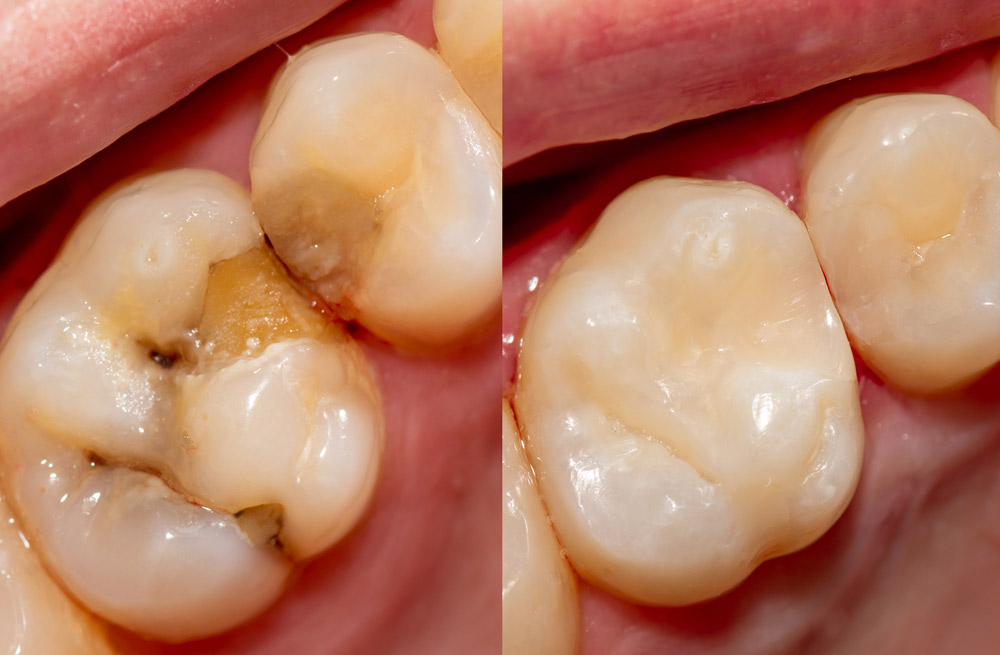
When decay has broken through enamel, the damaged tissue is removed and the space is filled. We use tooth-coloured composite, which bonds to the remaining tooth structure and disappears against your natural shade.
Why timing matters. A small cavity is a straightforward filling. The same cavity left another year may reach the nerve, and then the treatment is a root canal and a crown instead. The difference in cost and chair time between those two paths is substantial, and it is decided entirely by how early it is caught.
Crowns and Bridges
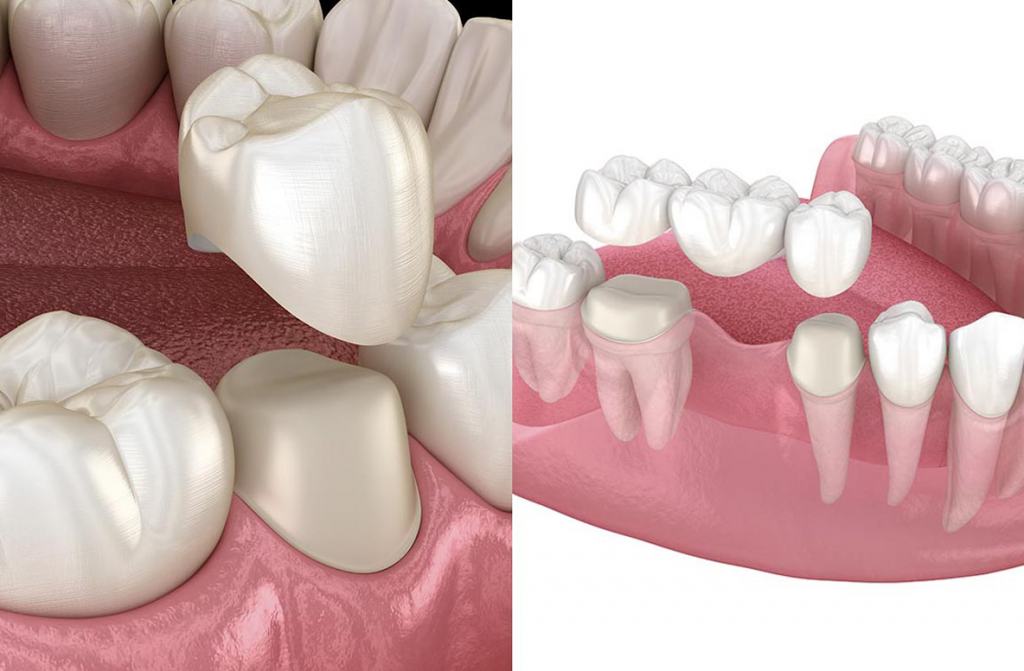
A crown covers a tooth that has too little structure left to hold a filling — after a large fracture, a failed old restoration, or a root canal. A bridge replaces a missing tooth by anchoring to the teeth on either side.
Ours are made by a dental laboratory over two visits. At the first, the tooth is prepared and you leave with a temporary. At the second, the final crown is fitted, adjusted, and cemented.
Some offices mill crowns in a single visit. We use a lab because it gives us a try-in stage — a chance to check fit, contour, and shade before anything is permanent, and to send it back if the match is not right. For a front tooth especially, that extra step is the difference between a crown that blends and one you notice in every photo.
If you would rather not make two trips, say so at your consultation and we will talk through it honestly.
Root Canals — Performed Here
A root canal treats a tooth whose nerve has become infected or died, usually from deep decay or trauma. The infected tissue is removed, the canal is cleaned and sealed, and the tooth is restored with a crown.
Dr. Kim performs root canals in-house. Many general practices refer these to an endodontist, which means a separate office, a separate appointment weeks out, and a separate bill — while you wait in pain.
What patients get wrong about root canals: the procedure is not the painful part. The infection is. Most patients report that the appointment felt like having a filling done, and that the relief afterward was immediate. The reputation root canals carry comes from an era before modern anesthesia and instrumentation.
Why saving the tooth is worth it. A natural tooth root preserves the jawbone around it and keeps neighbouring teeth from drifting. Extracting and replacing is almost always more involved and more expensive than treating.
Complex cases — unusual canal anatomy, retreatment of a previously failed root canal — may still be better served by a specialist, and we will say so if yours is one.
Extractions, Including Wisdom Teeth
Sometimes a tooth cannot be saved. Severe decay, a fracture below the gumline, advanced gum disease, or a wisdom tooth with no room to erupt.
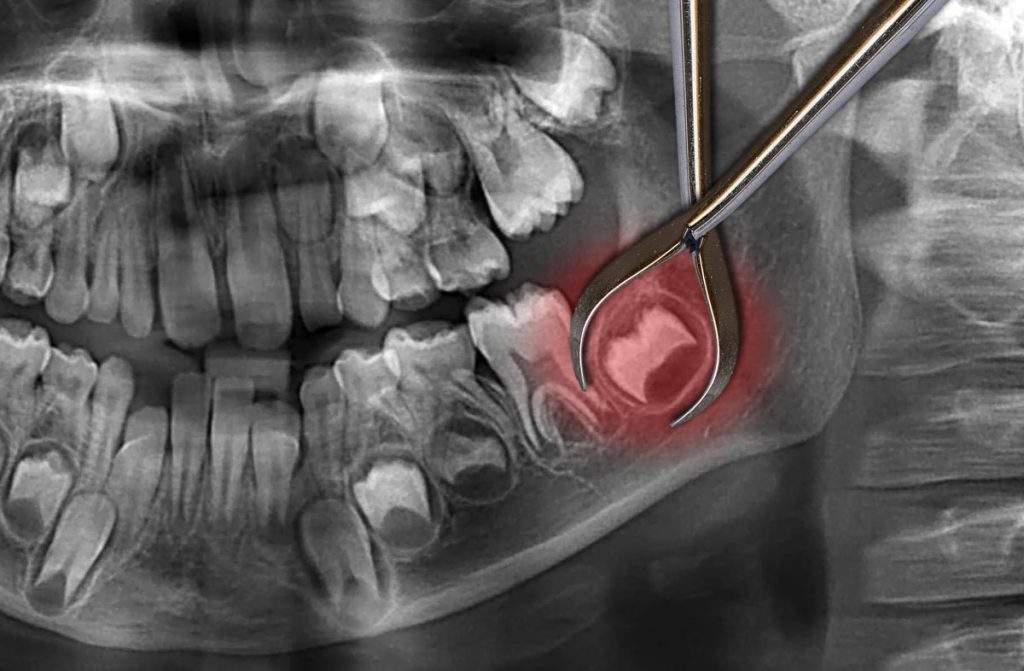
Dr. Kim performs both routine and surgical extractions, including impacted wisdom teeth. Again, most general dentists refer impacted cases to an oral surgeon. Having it done here means one office, one team, and continuity with whatever comes next — whether that is healing, a dental implant, or a denture.
On wisdom teeth specifically: not every wisdom tooth needs removing. Ones that have erupted fully, sit in a good position, and can be cleaned are usually left alone. Removal is recommended when a tooth is impacted, is damaging the tooth in front of it, is causing recurring infection, or cannot be kept clean. We will show you the x-ray and explain which category yours is in.
What recovery looks like. A routine extraction means a day or two of soreness. A surgical wisdom tooth extraction typically means three to five days, with swelling peaking around day two. We send you home with specific instructions and a number to call.
Treating Gum Disease
Gum disease is the leading cause of tooth loss in adults, and it is largely painless until it is advanced — which is exactly why it goes unnoticed.
Early signs: bleeding when you brush or floss, persistent bad breath, gums that look red or puffy, gums pulling back from the teeth.
Scaling and root planing is the treatment when disease has progressed past what a routine cleaning addresses. Plaque and hardened tartar are removed from below the gumline and the root surfaces are smoothed so the gum tissue can reattach. It is usually done in two visits with the area numbed.
What it does and does not do. Scaling and root planing stops the progression and lets inflamed tissue heal. It does not regrow bone that has already been lost. That is why catching it early matters, and why patients who have had it move to a more frequent cleaning schedule afterward — maintenance is what keeps it from coming back.
Our Five-Year Guarantee
Dr. Kim provides a five-year guarantee on the dental work he performs. The industry standard is considerably shorter, and many practices offer no written guarantee at all.
The reason we can offer a term this long is straightforward: a guarantee only makes sense if the work is planned carefully and done right the first time. It changes how treatment gets approached — an extra appointment to get a margin right costs less than redoing the crown in three years.
Specific terms are reviewed with you in writing as part of your treatment plan, before you agree to anything.
Paying for Treatment
You get a written treatment plan with the full cost before anything begins. If something needs doing urgently and something else can wait, we will tell you which is which rather than presenting one large number.
- Dental insurance. We accept most major plans and verify your benefits before treatment, so you know what your plan covers and what it does not.
- CareCredit. Monthly payment plans, including interest-free options for qualifying patients.
- Our in-house membership plan. For patients without dental insurance. Includes two cleanings, two exams, necessary x-rays, and a discount on treatment. Plans start at $100 per year.
Call 214.469.1001 and we can go through it before you sit in the chair.
Frequently Asked Questions
Can I be seen today if I have a toothache? Usually yes. We hold room in the schedule for same-day emergencies. Call 214.469.1001 as early as you can — the earlier you call, the more options we have.
Do you do root canals, or do I have to see a specialist? Dr. Kim performs root canals here. Complex cases with unusual anatomy or a previously failed treatment may be better handled by an endodontist, and we will tell you honestly if yours is one.
Do you remove wisdom teeth? Yes, including impacted wisdom teeth. Most general dentists refer these out; we do them here.
Does a root canal hurt? The procedure is done under local anesthesia and most patients describe it as similar to having a filling. The pain people associate with root canals is the infection beforehand — which is what the treatment relieves.
How often should I have a checkup? Twice a year for most adults. Patients with a history of gum disease or frequent decay do better on a shorter interval, and we will recommend based on your situation rather than a default.
Why do I need a crown instead of a filling? A filling relies on the surrounding tooth for support. When too much structure is gone — after a large fracture, extensive decay, or a root canal — a filling will fail and take more of the tooth with it. A crown covers and holds the tooth together.
Can you make a crown in one day? We use a dental laboratory over two visits, which lets us check fit and shade before the crown is permanent. For front teeth in particular, that step meaningfully improves the result.
My gums bleed when I brush. Is that normal? No. Bleeding gums are the earliest sign of gum disease and the stage at which it is most easily reversed. Have it looked at rather than waiting for it to stop on its own.
I have not been to a dentist in years. Will I be lectured? No. A lot of patients come in after a long gap, and there is usually a reason — cost, a bad past experience, or simply life. We are interested in where you go from here, not in how you got here.
Schedule a Visit in Frisco
Forest Dental Cafe serves patients throughout Frisco, Little Elm, The Colony, Prosper, and north Plano. We offer evening appointments and every-other-Saturday hours, and we hold time for same-day emergencies.
Call 214.469.1001 or request an appointment online.
8075 FM 423, Suite 110, Frisco, TX 75036